


 LA CRÈCHE ROMANE ROMANISCHE KRIPPE |
|
|
|
|
|
| Il est venu chez les siens, et les siens ne l’ont point reçu. Mais à tout ceux qui l’ont reçu, à ceux qui croient en son nom, il a donné le pouvoir de devenir enfants de Dieu, Jean 1, 11-12 |
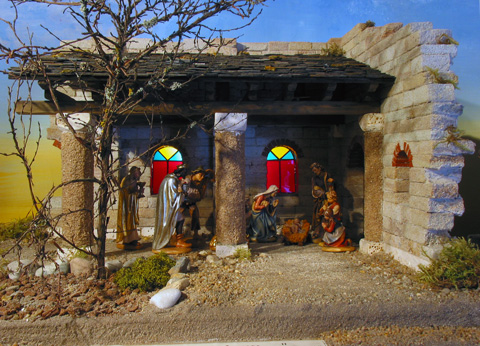
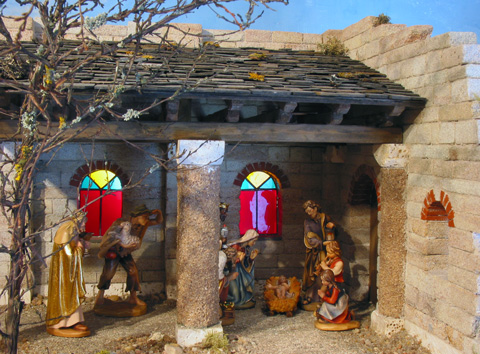
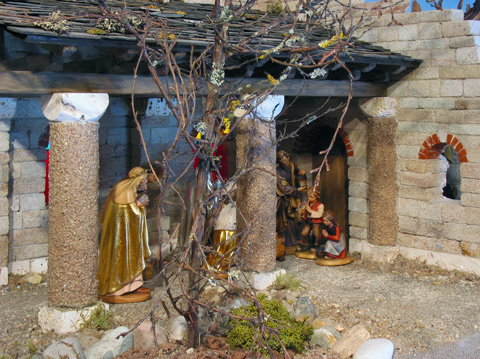
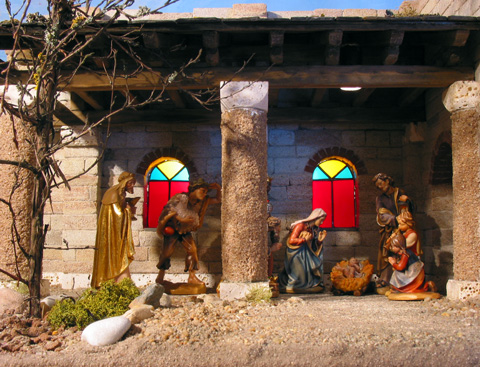
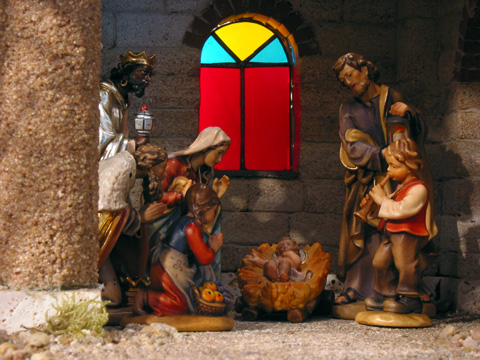
| La crèche a l’intention de présenter deux aspects de ce "mot de la crèche" : 1 La scène de la naissance se trouve dans le cloître devant, hors de l’église romane préfigurée au second plan. Ici, au-dehors, le roi des juifs, le messie, le Sauveur, JÉSUS est né. Apparemment, ici - en dépit des fenêtres illuminées, mais porte fermée - „ il n’y avait pas de place dans l’hôtellerie “ pour le Sauveur arrivant secrètement et silencieusement. Et qui ne pense pas aussi au mot du Ressuscité à l’église de Laodicée: Voici, je me tiens à la porte, et je frappe. … Apocalypse 3, 20 2 De temps en temps, l’occasion se produit de visiter une de ces vieilles églises. Asseyant sur un banc de l’église ou étant dans une ruine on peut admirer l’œuvre de ceux qui bâtissaient. Et tout en silence, on croit écouter des pierres le louange de dieu des générations passées : Le chant des moines ou des religieuses dans le chœur de l’église ou des fidèles dans la nef. Laudate omnes gentes, laudate dominum – Louez le Seigneur, tous les peuples. |
|
Video YouTube: "Laudate Omnes Gentes" |
| Avec un texte venant du psaume 117 c‘est un cantique nouveau de Taizé selon Jacques Berthier. Néanmoins, il fait penser aux lieux anciens en Bourgogne : Citeaux ou Cluny, à Clairvaux et Clermont et autres églises et cloîtres de l’Europe. Et c’est vrai pour Bethléhem, Jérusalem, Nuremberg et tous les lieux sur la terre où des "bergers et mages", enfants de dieu, adorent, chantent et diffusent le louange de dieu de manière diverse et depuis longtemps. Le louange de ceux qui ont reçu cet enfant, ce fils de dieu dans leur cœur et qui croient en son nom. Nuremberg, début 2001 |

|